

The Facility Manager’s Shortlist: How to Pick the Best Local Commercial Roofer Near You
How Do Small Roof Problems Turn Into Major Business Disruptions So Fast?
Act early: commercial roofing repair fixes leaks, membrane damage, flashing failures, and storm-related issues before they escalate. With Integrity Roofing, proactive repairs help protect your building, budget, and day-to-day operations.
If you need a quick answer, here’s what matters most:
- Act fast — minor roof damage that goes unaddressed can double in severity within weeks
- Know the signs — water stains, ponding water, blistering membranes, and exposed /damaged flashing all signal it’s time to call a professional
- Choose the right contractor — look for licensed, manufacturer-certified roofers with experience in your specific roof system (TPO, EPDM, metal, etc.) Not every roofer knows every roofing system.
- Repair vs. replace — if your roof is under 20 years old with isolated damage, repair is almost always the smarter, more affordable choice. Align with the right professional to guide you through the process
- Don’t skip insurance — storm or structural damage may be covered; always check your policy before paying out of pocket
Most commercial roofs last 20 to 30 years — but only with timely repairs and consistent maintenance. Ignoring a small leak or a patch of ponding water can accelerate that timeline significantly. Research shows that pooling water lasting more than 48 hours after rain can double the risk of membrane breakdown. That’s not a problem you want to put off.
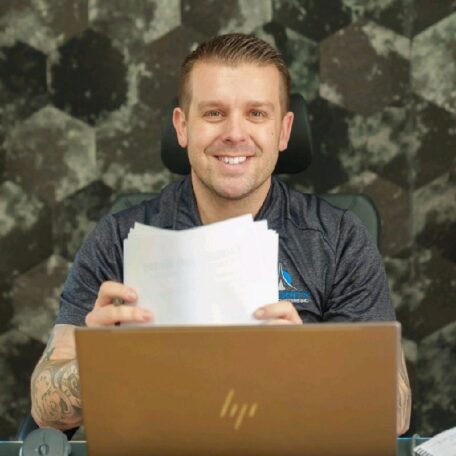
I’m James Thomson, President of Integrity Roofing & Gutters, with over many years of hands-on experience in commercial roofing repair across Florida’s toughest markets — Orlando, Jacksonville, and Central Florida. In this guide, I’ll walk you through everything you need to find the right commercial roofer and protect your property for the long haul.
Essential Guide to Commercial Roofing Repair Services
When it comes to your business, the roof is more than just a cover; it’s a critical asset that protects your inventory, your employees, and your operations. In Florida cities like Orlando, Jacksonville, and Port St. Lucie, the weather doesn’t play fair. Between the scorching UV rays and the torrential hurricane season rains, your roof is under constant “attack.”
True effective commercial roofing repairs is about more than just slapping a patch on a leak. It involves a systematic approach to leak prevention, adhering to strict safety standards, and ensuring your building’s roof remains structurally sound and performing at its best. A well-maintained roof also reflects heat, lowering your cooling costs in the Florida heat, while a damaged one allows conditioned air to escape, sending your utility bills through the stratosphere.
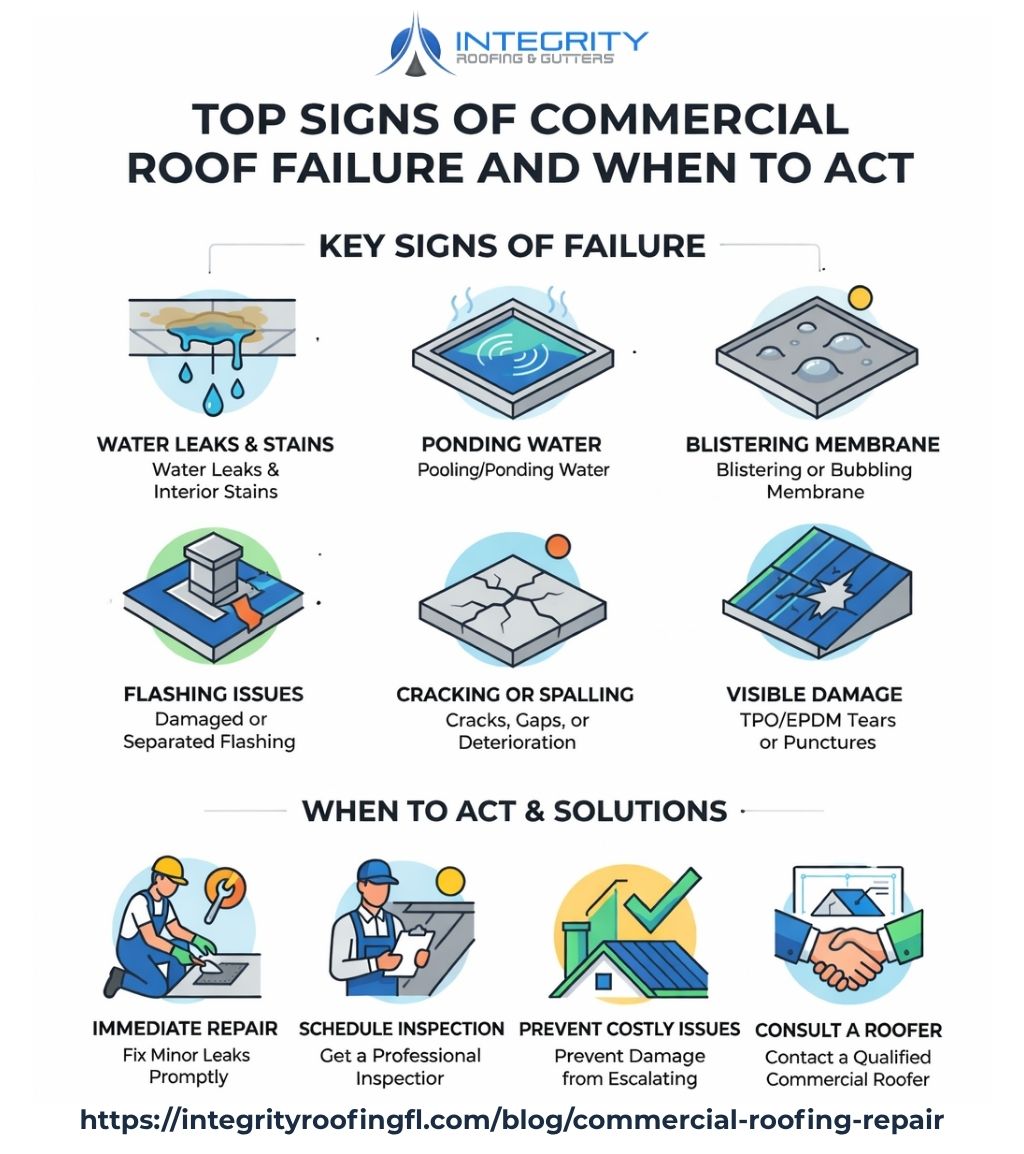
Identifying Common Signs You Need Commercial Roofing Repair
You don’t always need to climb a ladder to know your roof is in trouble. Often, the building itself will tell you. We’ve seen many business owners in places like Winter Park and Altamonte Springs catch issues early just by being observant.
Here are the “red flags” that indicate you need a professional inspection:
- Ponding Water: If you see standing water on your flat roof more than 48 hours after a rain event, your drainage is failing. This weight can stress the structure and accelerate membrane rot.
- Membrane Blisters: These look like bubbles under the roof surface. They are usually caused by trapped moisture or air expanding in the heat. If they pop, you have a direct line for water to enter.
- Interior Water Stains: Check your ceiling tiles. Yellow or brown rings are the classic “smoking gun” of a roof leak.
- Sagging Roof Deck: This is a serious structural warning sign. It often suggests that the underlying decking has rotted due to long-term water infiltration.
- Cracked or Loose Flashing: Flashing is the metal material used to seal the edges of the roof and around vents or chimneys. Because it’s a transition point, it’s often the first place a leak starts.
- Unusual Odors or Humidity: If your office suddenly smells like a damp basement, mold might be growing in your insulation.
For more detailed information on local services, check out our page on Orlando commercial roofing.
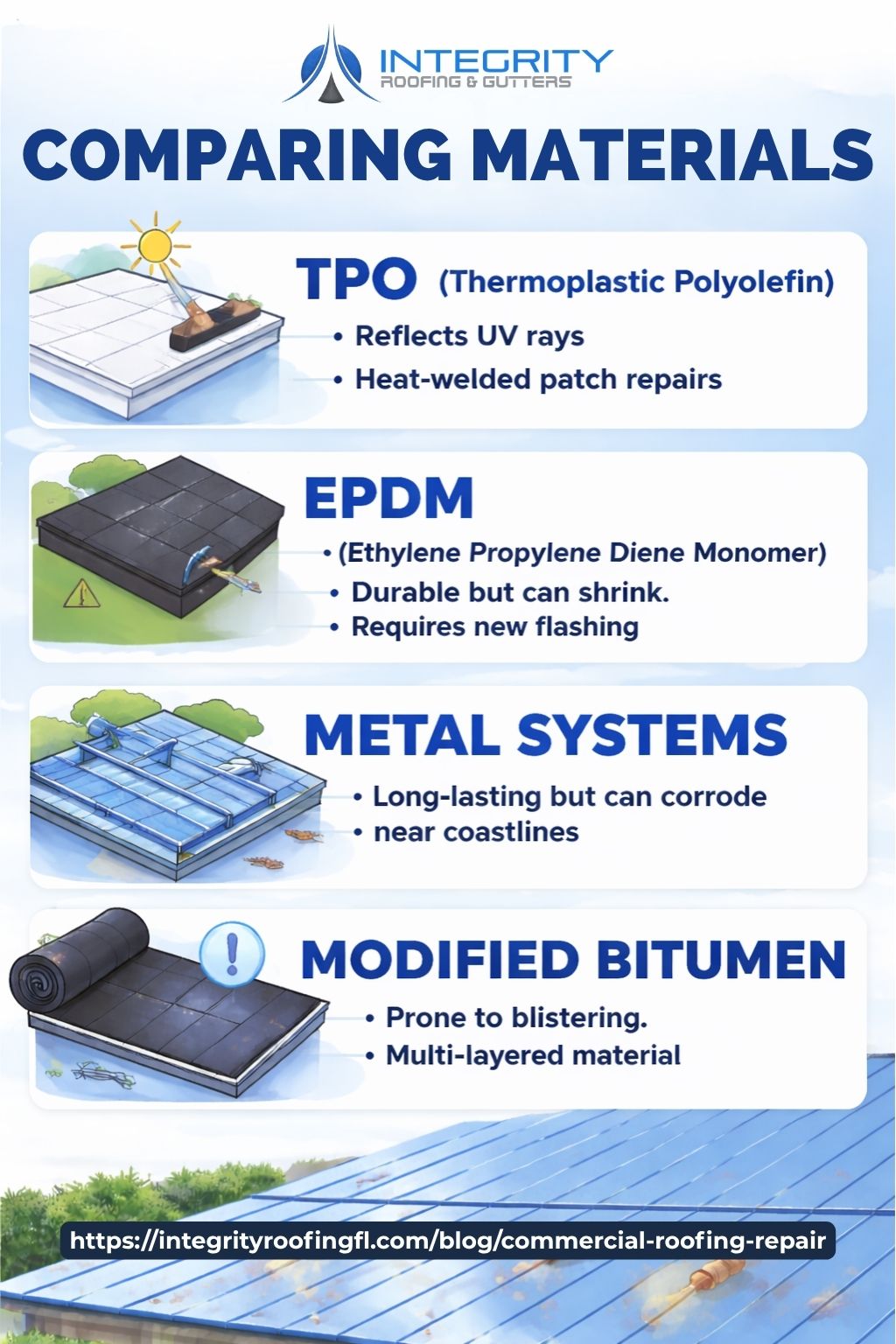
Comparing Materials: TPO, EPDM, and Metal Systems
Not all roofs are created equal. The type of material your building uses will dictate how we approach the commercial roofing repair. Whether you are in a historic building in DeLand or a modern warehouse in Jacksonville, understanding your system is key.
| Roof Material | Typical Lifespan | Common Repair Issues | Repair Complexity |
|---|---|---|---|
| TPO (Thermoplastic) | 20-25 Years | Seam failures, punctures | Moderate |
| EPDM (Rubber) | 20-30 Years | Shrinkage, adhesive failure | Low to Moderate |
| Metal (Standing Seam) | 40-60 Years | Loose fasteners, rust, oxidation | Moderate |
| Modified Bitumen | 10-20 Years | Blistering, granule loss | Moderate |
| PVC Membrane | 20-30 Years | Chemical damage, shattering | Moderate |
- TPO (Thermoplastic Polyolefin): Very popular in Florida because its white surface reflects UV rays. Repairs usually involve heat-welding new patches onto the existing membrane.
- EPDM (Ethylene Propylene Diene Monomer): A durable rubber material. While tough, it can shrink over time, pulling away from the edges of the building and requiring new flashing or “bridging” strips.
- Metal Systems: These are fantastic for longevity, but Florida’s salt air (especially in coastal spots like New Smyrna Beach or Daytona) can lead to corrosion if the protective coatings wear off.
- Modified Bitumen: These “multi-layered” roofs are hardy but prone to blistering if moisture was trapped during the initial installation.
Understanding the Costs and Process of Commercial Roofing Repair
We believe in transparency. When we arrive at a property in Lake Mary or St. Cloud, we don’t just guess where the leak is. We use technology to get the full picture.
The Inspection Phase: Modern commercial roofing repairs often utilizes infrared technology. Infrared cameras can detect temperature differences on the roof surface. Since wet insulation holds heat differently than dry insulation, we can “see” exactly where water is trapped under the membrane without tearing anything apart.
The Cost Spectrum: While we don’t provide flat pricing (because every roof is unique), costs generally fall into three categories:
- Minor Repairs: Fixing a few punctures, resealing a small area of flashing, or clearing a clogged drain.
- Moderate Repairs: Addressing larger areas of seam failure or replacing small sections of wet insulation.
- Extensive Repairs: Large-scale restoration or structural reinforcement.
The Insurance Question: Many business owners don’t realize that commercial roofing damage caused by “perils” like wind, hail, or fire is often covered by insurance. If a hurricane rolls through Kissimmee and rips up your TPO seams, your policy likely covers the fix. We always recommend reviewing your policy and having a professional roofer present when the adjuster visits to ensure no damage is overlooked.
For those in the northern part of our service area, you can find more specifics on Jacksonville commercial roofing.
Choosing Between Repair and Full Replacement
This is the “million-dollar question” for property managers. Do you keep patching the old roof, or do you bite the bullet and replace it?
Generally, if your roof is nearing the end of its 20-30 year lifespan and you are spending more on monthly patches than a new roof would cost in totality, it’s time to replace. However, if the damage is localized (less than 25% of the roof area is affected), a high-quality repair or a roof coating is a much better use of your budget.
When to Opt for Professional Maintenance and Restoration
The best commercial roofing repair is the one you never have to do. We advocate for “Roof Asset Management.” This means moving away from a “break-fix” mentality and toward proactive care.
Addressing small cracks or blisters early can actually extend the lifespan of your roof by 20% to 30%. Think of it like changing the oil in your car—it’s a small expense now that prevents an engine failure later.
Proactive maintenance includes:
- Regular Inspections: Twice a year (before and after hurricane season).
- Drainage Clearing: Removing leaves and debris from gutters and scuppers to prevent ponding.
- Sealant Reapplication: Periodically refreshing the caulking around HVAC units and vents.
- UV Coatings: Applying a reflective coating can add 10 years to an aging roof while providing superior UV resistance and lowering cooling costs.
Check out our full range of Orlando services to see how we can help manage your roof asset.
Regional Considerations for Florida Commercial Properties
Running a business in the Sunshine State comes with specific challenges. Whether your property is in Apopka, Clermont, or Melbourne, your roof faces a unique set of stressors.
- Hurricane Season: From June to November, your roof needs to be “battle-ready.” This means ensuring all edge metal is secure and there are no loose materials that can become projectiles.
- High Humidity: Florida’s humidity is a breeding ground for mold and algae. If left unchecked, these can eat away at certain roofing materials.
- Thermal Expansion: The rapid change from a 95-degree afternoon to a sudden thunderstorm causes materials to expand and contract quickly. This “thermal shock” can cause seams to pop and fasteners to back out.
- Salt Air: For our clients in places like Port St. Lucie or Daytona Beach, salt spray is a major factor in metal corrosion.
In the event of a major storm, we offer emergency response services to provide temporary dry-ins, preventing interior damage while we wait for the weather to clear for permanent repairs.
Partnering with Integrity Roofing for Your Business
At Integrity Roofing, we don’t just want to be your roofer; we want to be your business partner. We understand that every dollar you spend on your roof is a dollar taken away from your bottom line. That’s why we lead with honesty and transparency.
Why choose us for your commercial roofing repair?
- Manufacturer Certified: We are licensed to work on the major systems (TPO, EPDM, PVC, etc.), ensuring your manufacturer warranty remains valid.
- Quality Workmanship: We don’t cut corners. We use premium materials and document our work with before-and-after photos so you can see exactly what you paid for.
- Craftsmanship Warranties: We stand behind our repairs with strong warranties, giving you peace of mind.
- Multiple Estimates Encouraged: We are so confident in our value and integrity that we encourage you to get other quotes. We want you to feel 100% certain that you’re making the right choice.
Whether you’re managing a retail center in Sanford, a warehouse in Jacksonville, or an office building in Doctor Phillips, we have the expertise to keep you dry.
Need trusted help from commercial roofing experts? Request a commercial roofing repair quote from Integrity Roofing today. Our team will assess your roof, explain your options clearly, and give you a straightforward, no-pressure plan to protect your building and keep your business moving.
Get Started With Your Roofing Project Today!

Ready to experience the difference that integrity makes? Contact us today for a free, no-obligation estimate. Let’s build a secure future for your home, together.